 عربي
عربي
 English


Gaza... thirst comes before summer!
As temperatures rise to nearly 30°C and the summer sun draws close to the tents of displaced families, more than 2 million people in the Gaza Strip face a terrifying reality: "water deprivation".
After years of infrastructure destruction, water is no longer just a disrupted service; it has become a distant dream. Save them from thirst with your donation now.
Donate Now and Save a Life
Why can’t we afford to wait?
According to the latest 2026 reports by UNICEF and OCHA:
80% shortage
Water production in Gaza has dropped dramatically due to the shutdown of desalination plants and damage to groundwater wells.
Shattered infrastructure
More than 70% of water distribution networks and sewage lines have been damaged, causing drinking water contamination.
Risk of epidemics
26% of widespread diseases are linked to contaminated water, and half of Gaza’s children suffer from acute intestinal infections.
Only 3 liters
A displaced person receives less than 3 liters daily for all uses, while the minimum for survival is 15 liters.
"The best charity is giving water to drink."
(Authentic hadith: narrated by An-Nasa’i from Sa’d ibn Ubadah, may Allah be pleased with him, and authenticated by Al-Albani)
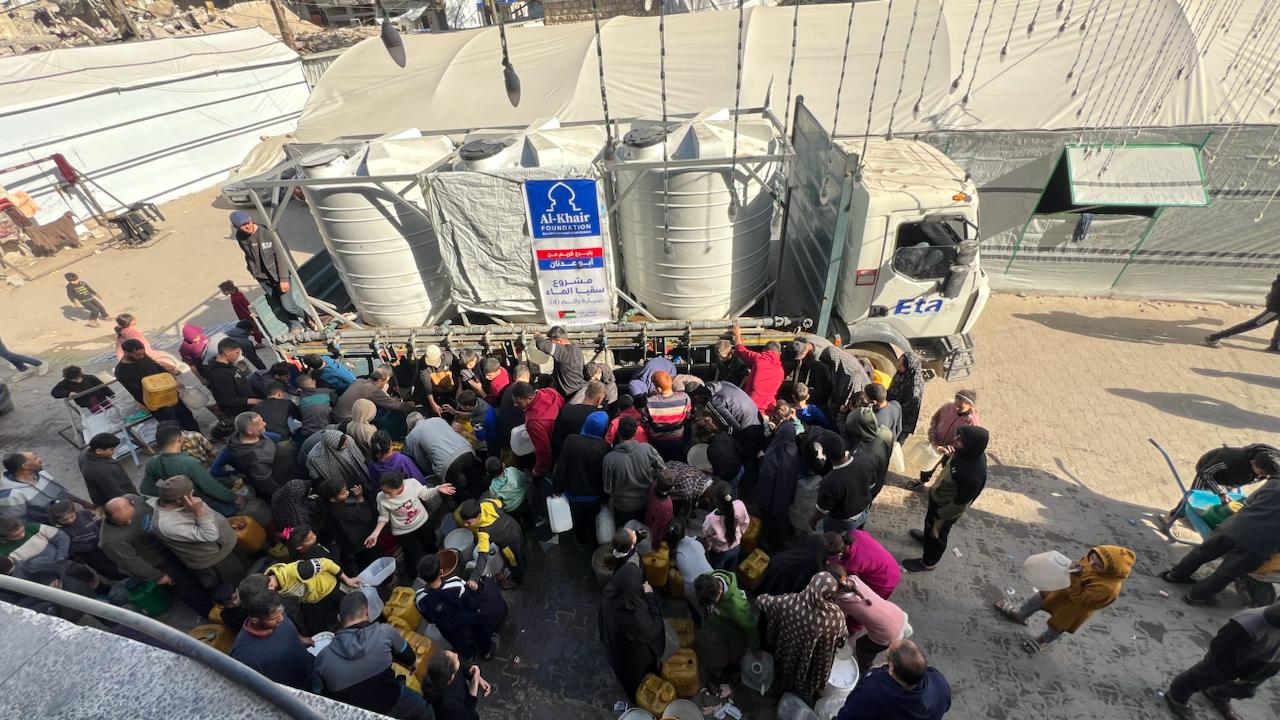
How we deliver water to our people in Gaza
We work through integrated field and humanitarian interventions to secure clean water, reduce the impact of thirst, and support families in the most affected areas.
Frequently asked questions
- Water trucking to displacement areas
- Establishing water distribution points
- Providing storage tanks for families
- Monitoring water quality to ensure safety
- Protect public health
- Prevent water-related diseases
- Support daily life activities
- Maintain dignity and stability
- Deliver clean water to displaced families
- Support water transportation and distribution systems
- Maintain continuous access to safe water
- Expand water aid programs in high-need areas
- Displaced families
- Communities affected by crisis
- Vulnerable groups, including children and elderly individuals
- Regular testing and monitoring
- Using safe storage and transportation systems
- Following recognized health and safety standards
- Managing distribution to reduce contamination risks
- Ensure consistent access to water
- Improve living conditions over time
- Strengthen long-term humanitarian response
Well projects: Long-term solutions that create sustainable water sources